
On April 1, 2026, NASA launched the Artemis II mission, which is the most significant human spaceflight event since Apollo 17 in 1972. For the first time in more than half a century, four astronauts are traveling to the vicinity of the Moon aboard NASA's 'Orion spacecraft,' riding atop the powerful 'Space Launch System' (SLS) rocket from Launch Complex 39B at "Kennedy Space Center" in Florida.
The crew consists of Commander "Reid Wiseman," Pilot "Victor Glover," who is the first Black astronaut assigned to a lunar mission, Mission Specialist "Christina Koch," who is the first woman to travel this far into deep space, and Canadian Space Agency Mission Specialist "Jeremy Hansen," who is the first Canadian to travel to the Moon's vicinity.
The 10-day mission is not a lunar landing. Instead, the spacecraft swings around the far side of the Moon and uses lunar gravity as a slingshot to propel it back to Earth. This is the same gravity-assist path used by Apollo 13 during its famous emergency return in 1970. The mission's primary purpose is to test the Orion spacecraft's life-support, propulsion, navigation, and thermal systems with a live crew.
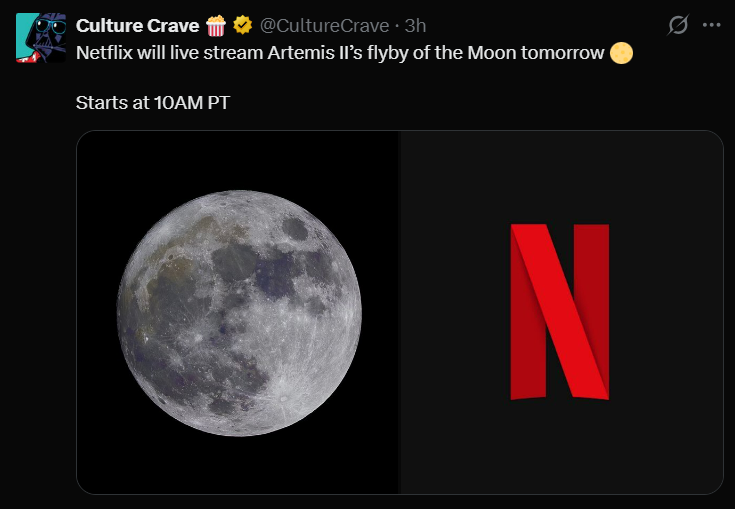
The Artemis II crew has colleagues in space simultaneously, who are on the "International Space Station" that is currently orbiting Earth with its own crew aboard, and the Artemis II astronauts will speak with them via radio during the return journey. Streaming services and broadcasters worldwide, including Netflix, Amazon Prime, Apple TV, Hulu, HBO Max, and Roku, are carrying live coverage of the flyby, making this the most accessible Moon mission ever broadcast to the global public.
The Artemis II crew has colleagues in space simultaneously, who are on the "International Space Station" that is currently orbiting Earth with its own crew aboard, and the Artemis II astronauts will speak with them via radio during the return journey. Streaming services and broadcasters worldwide, including Netflix, Amazon Prime, Apple TV, Hulu, HBO Max, and Roku, are carrying live coverage of the flyby, making this the most accessible Moon mission ever broadcast to the global public.
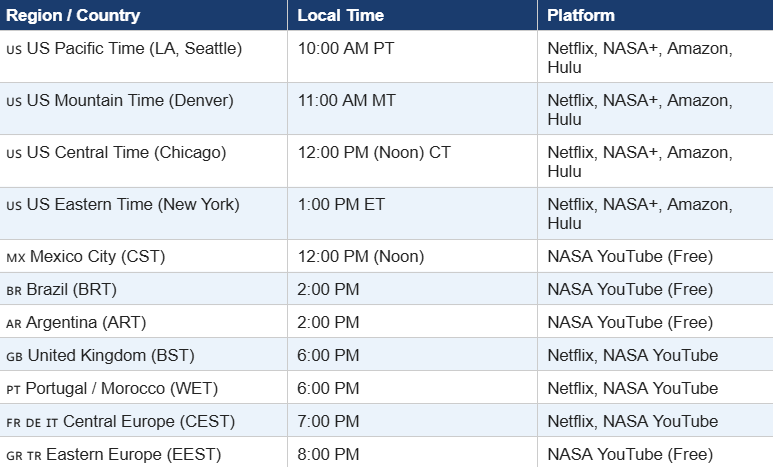
Complete Global Streaming Schedule:
The Artemis II lunar flyby livestream is available on multiple platforms starting at 1:00 PM EDT (Eastern Daylight Time) on April 6, 2026. NASA also runs a 24/7 mission feed on its YouTube channel and NASA+ platform for those who want continuous coverage throughout the 10-day mission.
You don't need a Netflix subscription to watch this historic moment. NASA's YouTube channel streams the flyby completely free of charge, 24/7, with live commentary from Mission Control. The NASA+ app is also free and available across smart TVs, phones, tablets, and streaming devices. For the best experience, Netflix subscribers can find the stream directly in the NASA+ section of the app.
Western Countries — Daytime and Evening Viewing:
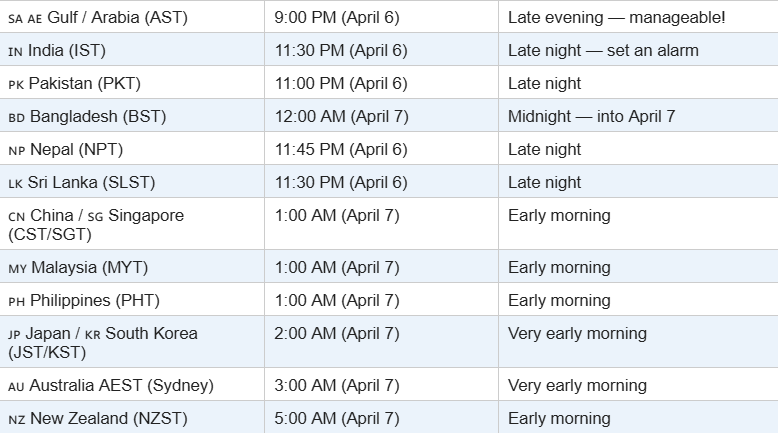
Asia, the Middle East and Pacific — Late Night or Early Morning:
As of today, Artemis II will officially break a 56-year-old distance record set during one of NASA's darkest moments. During Apollo 13's 1970 emergency, astronauts Lovell, Haise, and Swigert were flung to 248,655 miles from Earth while trying to survive an oxygen tank explosion. Artemis II will surpass that at 252,757 miles at 1:56 PM EDT today, making it humanity's farthest emissaries from our home planet, on purpose and in safety.
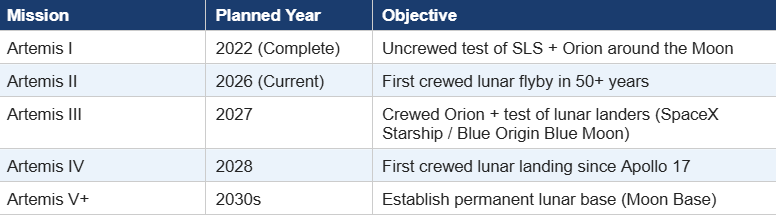
What Comes Next in the Artemis Program?
Artemis II is just the second step in NASA's long-term plan to return humans permanently to the Moon.
After traveling to Moon, the Orion spacecraft uses the Moon's gravity to begin the journey home on a free-return trajectory, which means no additional engine burns needed for the basic return path. The four-day return journey includes a scheduled live radio conversation with ISS crew members, including astronaut "Jessica Meir," who will reunite with her partner "Koch" during the first all-female spacewalk.
Anyways, what are your thoughts on the Artemis II Mission? Let me know in the comments, where you can also provide the latest news so I can make a breakdown of it.