
In late 2025 and heading into 2026, many tech markets and analysts are seeing cost pressures that are directly or indirectly affecting hardware pricing for consumers. This issue was started on mid 2025 and price hikes formalizing in late December 2025 and early 2026. There are reports which are largely from industry forums and secondary outlets, suggesting that companies such as NVIDIA and AMD could raise the prices of graphics card in early 2026, and this is happening due to shortage of memory (DRAM and VRAM). I have covered this already in my previous article - Next-Gen Consoles Could Be Delayed Due to Rising RAM Prices.
Now this issue is slowly affecting several Gaming and Tech companies. Among the most talked-about claims is that NVIDIA’s flagship GPU, the RTX 5090, could see its price rise from around $1,999 MSRP to as much as $5,000 next year due to soaring DRAM/GDDR costs and supply issues. On the other hand, Gaming company like ASUS, has officially announced that it will raise its product prices starting at January 5, 2026, pointing directly to cost pressures on RAM and storage components, which are largely driven by the demand from the AI sector.
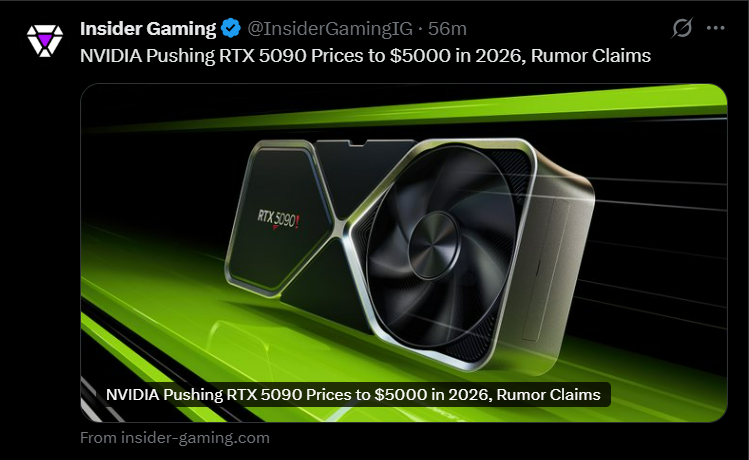
The root cause of these price pressures begins with memory supply constraints. Global DRAM and GDDR memory prices have surged due to increased in demand from many 'AI data centers' and 'enterprise compute workloads'. Both DDR5 and GDDR memory are also used in both PCs and GPUs and that's why many Gaming companies are under pressure as well. The reason behind the demand for RAM by AI is that AI training and inference systems require enormous amounts of memory and storage. Because GPUs themselves rely heavily on GDDR memory modules, manufacturing costs increase when these chips cost more, pressuring companies like NVIDIA and AMD to consider passing costs onto consumers.
If rising component costs persist into 2026 and beyond, several issues could emerge. Consumers may soon see the price that increases in several new GPU models, especially high-end graphics cards using more memory. Some forecasts also suggest that increases could be in the double-digit percentage range or even higher. The PC market will slowdown as overall PC pricing may rise because of shortage and increase in prices of RAM. Even analysts have warned that this could shrink the global PC market as buyers postpone upgrades or substitute devices. Memory shortages might even cause production delays or reduced supply of certain models, leading to scarcity or long lead times. Higher entry costs for GPUs and PCs could price out budget gamers or small builders, hurting the DIY PC ecosystem.
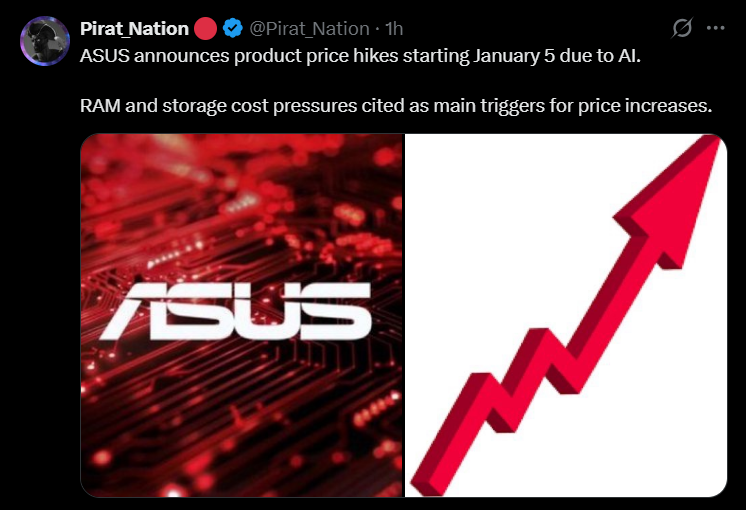
What remains still unconfirmed is that there's still no official price announcements from NVIDIA or AMD confirming a $5,000 MSRP for any GPU models, because that number comes from industry rumor channels and secondary reporting. Even ASUS has said that it will raise prices due to cost pressures, but has not published exact increase percentages or for which products. There's still no direct statement from any major memory manufacturers (like - Samsung or SK Hynix) tying memory allocation decisions specifically to GPU pricing strategies. However, the market forces are widely acknowledged indirectly and it is always aware of what's cooking inside.
Anyways, what do you guys think of this situation? Do you think this could get even worse especially, when there's such heavy demand and competition in the tech market? Let us know your answers in the comments.